1. Surface preparation
The inspection area is prepared so that surface condition or contamination does not interfere with the examination.
 post@tt-ndt.com
Contact us
post@tt-ndt.com
Contact us
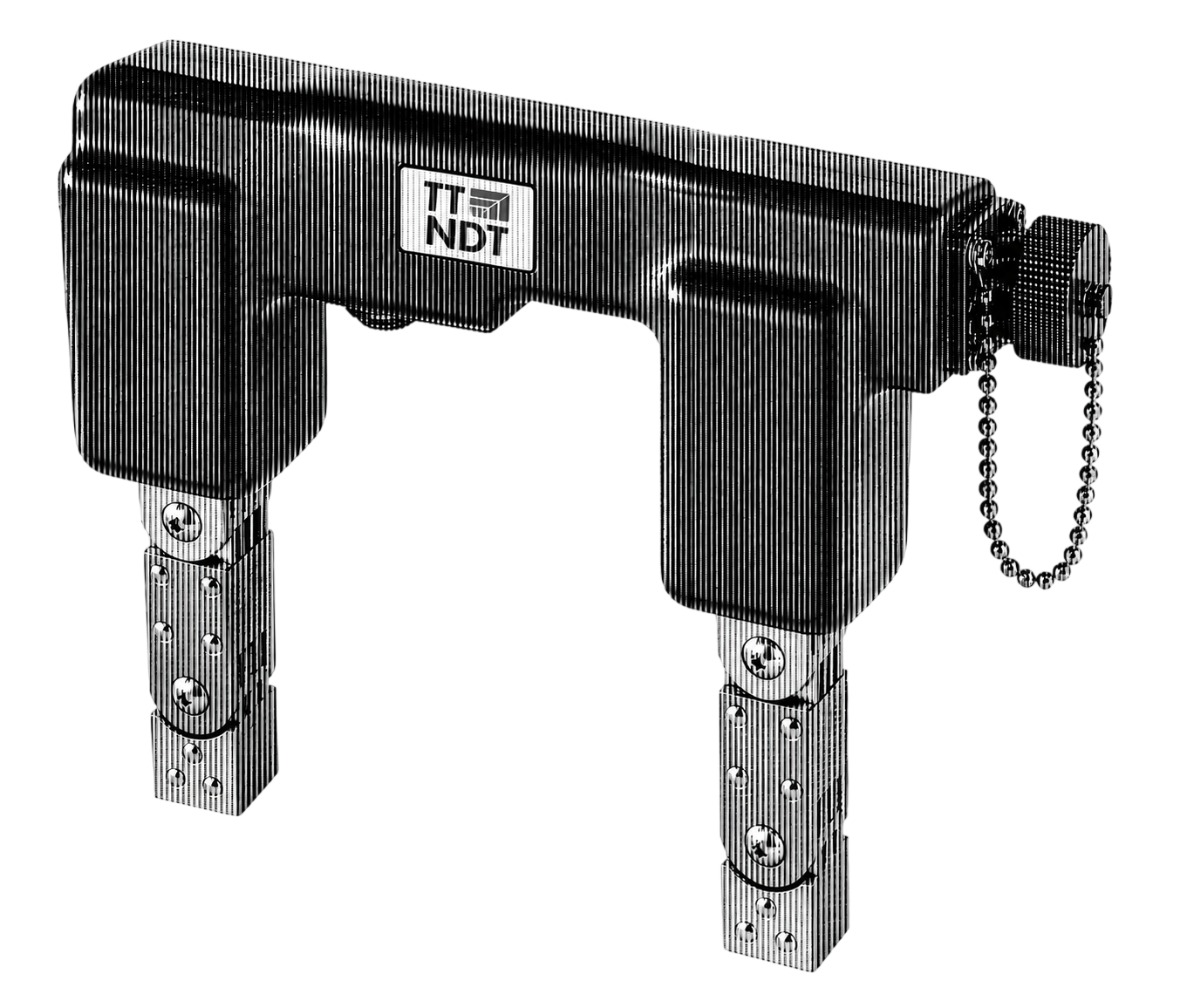
Magnetic particle testing (MT), also known as magnetic particle inspection (MPI), is a non-destructive testing method used to identify surface and near-surface defects in ferromagnetic materials. It is commonly applied to welds and industrial components where visible surface examination alone may not provide enough information.
During a magnetic particle test, the inspection area is magnetized and magnetic particles are applied to the surface. Relevant particle indications are then evaluated and documented to support decisions on acceptance, repair or further examination.
Magnetic particle inspection uses a magnetic field and fine ferromagnetic particles to reveal discontinuities at or close to the surface of a component. When a discontinuity interrupts the magnetic field, particles can gather around the affected area and form a visible indication for evaluation.
The method is limited to ferromagnetic materials and is intended for the detection of surface and near-surface discontinuities. It can be used for welds and other industrial components where magnetic inspection is suitable for the material and inspection objective.
If the required information lies beyond the capability of magnetic testing, another NDT method may be needed to complete the assessment.
Magnetic particle inspection can be performed using different particle media and viewing conditions. The wet, dry and fluorescent approaches are selected according to the component, inspection conditions and required sensitivity.
The wet method uses magnetic particles suspended in a liquid carrier, allowing the particles to distribute evenly across the inspection area. It is suitable where clear detection of fine surface and near-surface indications is required.
The dry method uses magnetic particles applied directly to the magnetized surface. It can be suitable for larger components and inspection conditions where the use of a liquid suspension is not preferred.
The fluorescent method uses fluorescent magnetic particles viewed under ultraviolet light to provide strong contrast between relevant indications and the inspected surface. For projects requiring a dedicated wet fluorescent process, see our Wet Fluorescent Magnetic Test service.
The inspection area is prepared so that surface condition or contamination does not interfere with the examination.
A magnetic field is applied to the component using an approach suitable for the inspection area and the required examination.
Magnetic particles are applied to the magnetized inspection area using the selected wet, dry or fluorescent approach.
The inspector evaluates relevant particle indications and records the findings identified during the examination.
Where the results indicate that further investigation is required, another NDT method can be considered for additional information.
Magnetic particle weld testing is used to examine ferromagnetic welded joints for surface and near-surface indications that may require evaluation.
MPI inspection can be applied to ferromagnetic components where cracks or other relevant surface and near-surface discontinuities need to be identified.
Magnetic testing can support fabrication, maintenance and condition assessment by providing documented information about relevant indications in the inspected area.
Our magnetic particle examination service focuses on selecting an appropriate inspection approach for the component and clearly documenting relevant indications. The method can be used for welds and other ferromagnetic components where surface and near-surface defects need to be assessed.
Each inspection is documented with findings and recommendations that can support the next technical decision. Where magnetic particle testing cannot provide the required information, another NDT method may be considered for further examination.